

For entrepreneurs struggling to promote themselves
If perfectionism and self-doubt keep you hidden, let's make it easy to show up as you.
Trust Your Way. Feel Safe Being Seen. Be Found By Your People
The evidence-based method: CBT-Hypnotherapy
-
You'll talk about your work the way you'd explain it to a friend.
Being visible start feeling not only comfortable, but enjoyable too. You'll post without rewriting ten times. You’ll feel safe and confident to express yourself. You attract the right people because you are finally showing yourself.
-
We identify the automatic patterns and behaviors that activate when you try to be visible. Then we use CBT-Hypnotherapy to interrupt and rewire those responses at the nervous system level. Your body and brain learn that visibility is actually safe.
-
For business owners, entrepreneurs and founders who have a mission, a purpose, but feel anxious or doubt themselves when they have to go public about their offer and their price. They might even have something already going on, but are afraid to go bigger and bolder.
You’re reflective, capable, and done with forcing confidence or “just pushing through.” You want a grounded, serious method that works with your system, not against it.
Entrepreneurs who are brilliant at their work but can't bring themselves to promote it. If you rewrite posts endlessly, soften your prices, or wait to feel "ready," this is for you. You know what to do—you just can't make yourself do it.
-
The sessions are online, each of them lasting 60 minutes.
Let's dive into what’s really going on
"What if it’s not good enough?"
You're sitting on your couch sipping some tea, working on your offer. Most likely you started very excited and motivated when you opened the laptop, but now things are bit difficult.
You want to…
feel at ease talking about what you do
put your offer out there, both online and in real life
set prices that feel good and are sustainable
attract clients that need what you offer.
But you …
question if it’s good enough and re-work the re-work;
compare yourself with others;
question your skills, your approach, your voice;
feel anxious whenever you need to speak in front of people (or online)
So you decide to wait some more, stay hidden and keep editing stuff until you’ll figure out “the right way to do it“.


What does being visible mean?
Going beyond “post more”, think of it as being grounded and authentic when speaking, when taking space in a room, when sharing your work, pricing or daring to expanding it.
So, why is it so hard?!
(hint: is not the "I'm bad at marketing")
Your nervous system learned long ago that visibility is risky. Being seen maybe meant criticism and standing out meant rejection. Making mistakes meant shame or punishment.
Then your brain did what it knew best to protect you and built a pattern: visibility = danger.
This pattern lives in your body, not just your mind, it's automatic and unconscious which is why logic and willpower won't fix it.
You can know that posting is safe and you can understand your business needs visibility. I bet you saw tons of business videos on youtube and know some good podcasts. But when it's time to actually do it, panic mode: ON.
Threat is detected and then safety mechanisms activate: doubt, endless editing, procrastination, overthinking etc., fun folks from “Anxiety Division“ .
Every time you don't post, don't promote and don't put yourself out there, you feel temporary relief. Then your nervous system takes note: "See? Avoiding = safe, told you! Let's keep doing this." and the pattern gets stronger.
Mindset or confidence can’t do their magic because it's about an automatic threat response that's trying to protect you by keeping you hidden.
Your mind says "just do it." Your body says "absolutely not!" Guess who wins. Well, the body.

THE SOLUTION: REWIRE INNER PATTERNS
Your brain is neuroplastic, meaning it can be rewired. When new ways of showing up are experienced and repeated, the brain updates the pattern and self-promotion can start to feel safer, more natural, even enjoyable.
HOW IT WORKS
IDENTIFY THE AUTOMATIC RESPONSE - We start by bringing unconscious patterns into awareness, by mapping the link between triggers, feelings, thoughts, body reactions, and behaviors. This makes it clear what your system automatically does when you are about to be seen, before you consciously decide anything. Once the pattern is identified, it can be worked with instead of unconsciously repeated.
INTRERRUPT THE PATTERN - Using CBT-Hypnotherapy we work on creating an internal pause where the usual stress response no longer runs on autopilot. By working with focused attention and reduced mental noise, the old reaction loses momentum. This interruption weakens the habit loop that normally drives avoidance or self-doubt.
REWIRE THE RESPONSE - In this step new responses are learned during hypnosis, through focused mental rehearsal, physical and emotional engagement, not just reasoning. The brain is guided to experience a different way of thinking, feeling, and responding to visibility as if it were already happening. This allows new neural pathways to form around showing up, safety and confidence.
SOLIDIFY CHANGE INTO NEW DEFAULT - Repeated rehearsal and reinforcement strengthen the new pathway until it becomes the preferred response. CBT-Hypnotherapy supports this consolidation so the new behavior holds even under pressure,. Over time, promoting yourself no longer triggers the old alarm, because the nervous system has learned a different default.

Real confidence is what happens when you feel safe being yourself.

What is CBT-Hypnotherapy?
Hypno-CBT® is a unique form of hypno-psychotherapy that integrates hypnosis, cognitive behavioural therapy, and mindfulness. Research shows that adding hypnosis to CBT improves outcomes for around 70% of people compared with CBT alone. (link)
It’s a structured, evidence-based process for updating beliefs, reducing stress and anxiety, and increasing emotional and behavioral flexibility.
-
The feeling is similar to when you watch a movie and you are absorbed by what’s going on there. And yet, you can still hear the door bell and you can pause it anytime.
-
Greater Effectiveness: Combining CBT and hypnosis has shown 70% better outcomes compared to CBT alone.
Faster Results: Hypnotherapy helps achieve meaningful improvements more quickly.
Brain-Based Changes: Neuroscience confirms hypnosis directly influences brain areas linked to emotions, habits, and responses.
-
No. You are awake and at all time in control of your actions.
-
THE SHORT EXPLANATION:
Brain-imaging research shows hypnosis can change patterns in attention and self-monitoring networks, which may help people get less hooked by self-consciousness and more able to stay engaged with a chosen goal.
Hypnosis helps change patterns because it’s effect on the brain:
reduces self-critical noise,
stabilises attention,
makes new experiences feel real enough for the brain to learn from,
allows old threat-based predictions to be replaced with more accurate ones.
That’s why change can feel efortless and more natural over time. The brain isn’t being forced to behave differently, it’s being retrained.
THE LONG EXPLANATION
During hypnosis, the brain doesn’t switch off and it doesn’t go into a special “sleep” state. Instead, how different brain systems talk to each other changes.
Normally, when someone feels anxious about being seen or performing, three things tend to happen in the brain at once:
the self-monitoring system becomes overactive (“How am I coming across?”),
the threat system stays on alert,
and attention keeps bouncing between worries, predictions, and self-criticism.
Brain-imaging studies show that during hypnosis, this balance shifts.
First, self-monitoring quiets down.
Areas involved in constant self-evaluation and internal commentary become less dominant. This is why people often report feeling less self-conscious or less “in their head.”Second, focused attention becomes stronger and steadier.
Networks that help you stay engaged with one thing at a time become more coordinated. Instead of scanning for problems, the brain can stay with a chosen image, idea, or task.Third, the connection between thinking and bodily awareness changes.
Regions involved in noticing internal sensations become more connected to intentional focus. This helps thoughts feel more “real” and embodied, rather than abstract or distant.Importantly, this doesn’t mean losing control. It means less internal interference and more direct learning.
Why this helps change patterns and behaviour
Most unhelpful behaviours aren’t driven by logic. They’re driven by learned brain–body responses. The brain learned them through repetition, emotion, and experience, not through reasoning.
In hypnosis, the brain is in a state where:
old alarm signals are quieter,
attention is more stable,
and new experiences are taken in more deeply.
That makes it easier for the brain to update its predictions.
When someone rehearses a new response in this state — for example, speaking up without collapsing into doubt — the brain processes it less as “just imagination” and more as a valid experience. This matters because the brain updates its wiring based on experience, not explanation.
Over repeated practice, the brain starts to expect the new response instead of the old one. The nervous system no longer reacts as strongly, because it has learned that the situation isn’t as dangerous as it once assumed.
A widely cited fMRI study (Jiang et al., 2017; Spiegel is a senior author) found that during hypnosis there was:
reduced activity in the dorsal anterior cingulate cortex (dACC)
increased connectivity between DLPFC and insula
reduced connectivity between DLPFC and posterior cingulate cortex (PCC) (a key default mode network node)
-
In a meta-analysis of controlled studies (Valentine et al. (2019) ,International Journal of Clinical and Experimental Hypnosis), people receiving hypnotherapy improved more than roughly 79% of control participants by the end of treatment, and more than 84% at follow-up. The same meta-analysis reports that 7 of the 17 trials targeted performance anxiety.
In a meta-analysis of controlled studies (Valentine et al. (2019) ,International Journal of Clinical and Experimental Hypnosis), people receiving hypnotherapy improved 79% more than control participants by the end of treatment, and more than 84% at follow-up.”
The same meta-analysis reports that 7 of the 17 trials targeted performance anxiety.
YOUR CHANGED EXPERIENCE
-

TRUST YOUR WAY
You allow your uniqueness to lead expressing yourself from what’s true at the core, not from what you think will be acceptable.
-

FEEL SAFE BEING SEEN
You talk about what you do feeling as if you'd explain it to a friend over coffee. There’s a sense of being settled inside as you speak. Small crowds, big crowds, both doable. Being visible is now actually enjoyable and safe. Trust replaces control and your voice follows.
-
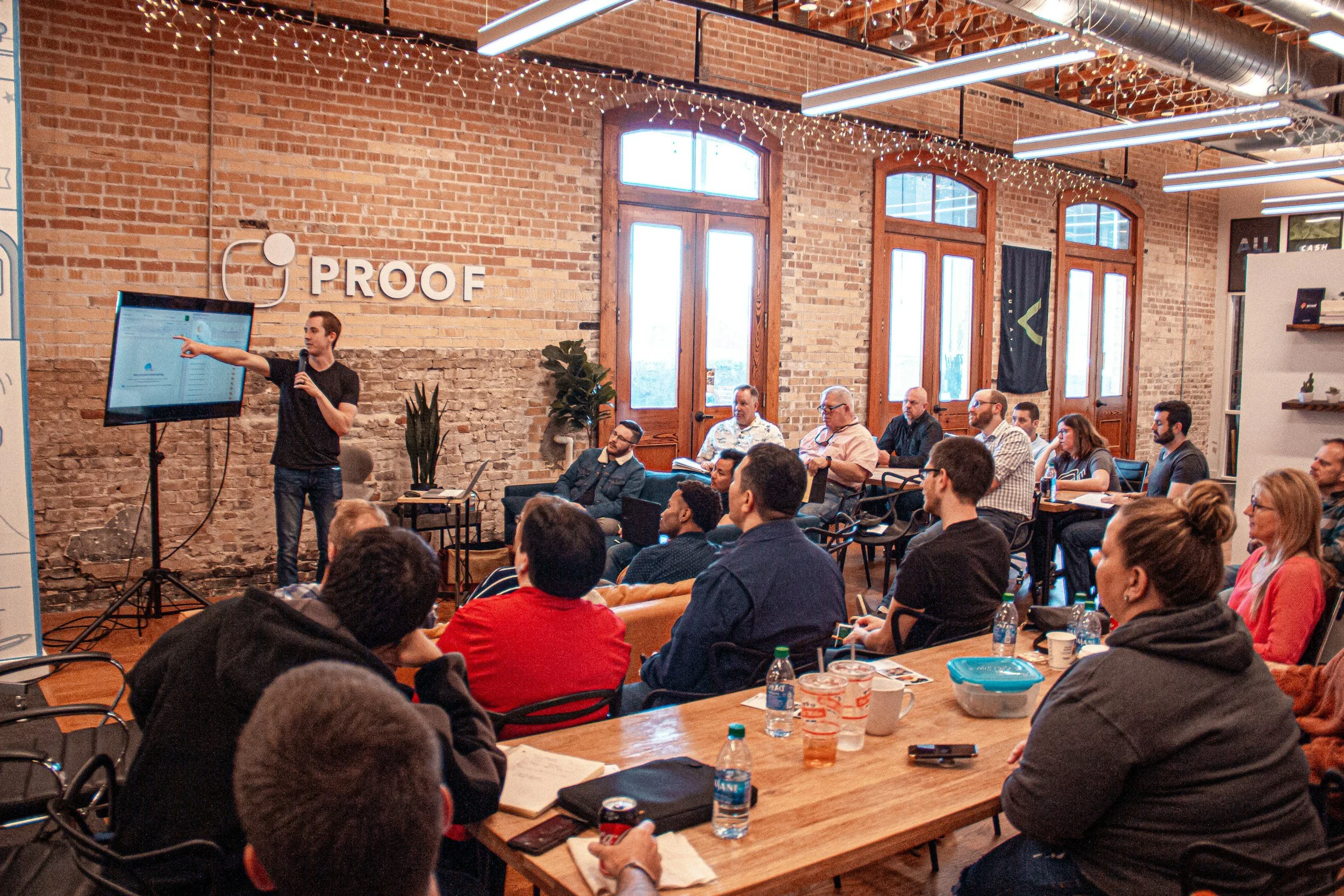
BE FOUND BY YOUR PEOPLE
When you’re not filtering or over-polishing yourself, your message becomes clear and more resonant. Authentic expression acts like a signal: it lets the people who are already looking for what you offer to find and recognize you.
Let’s make showing your work as comfortable as your favorite sweater

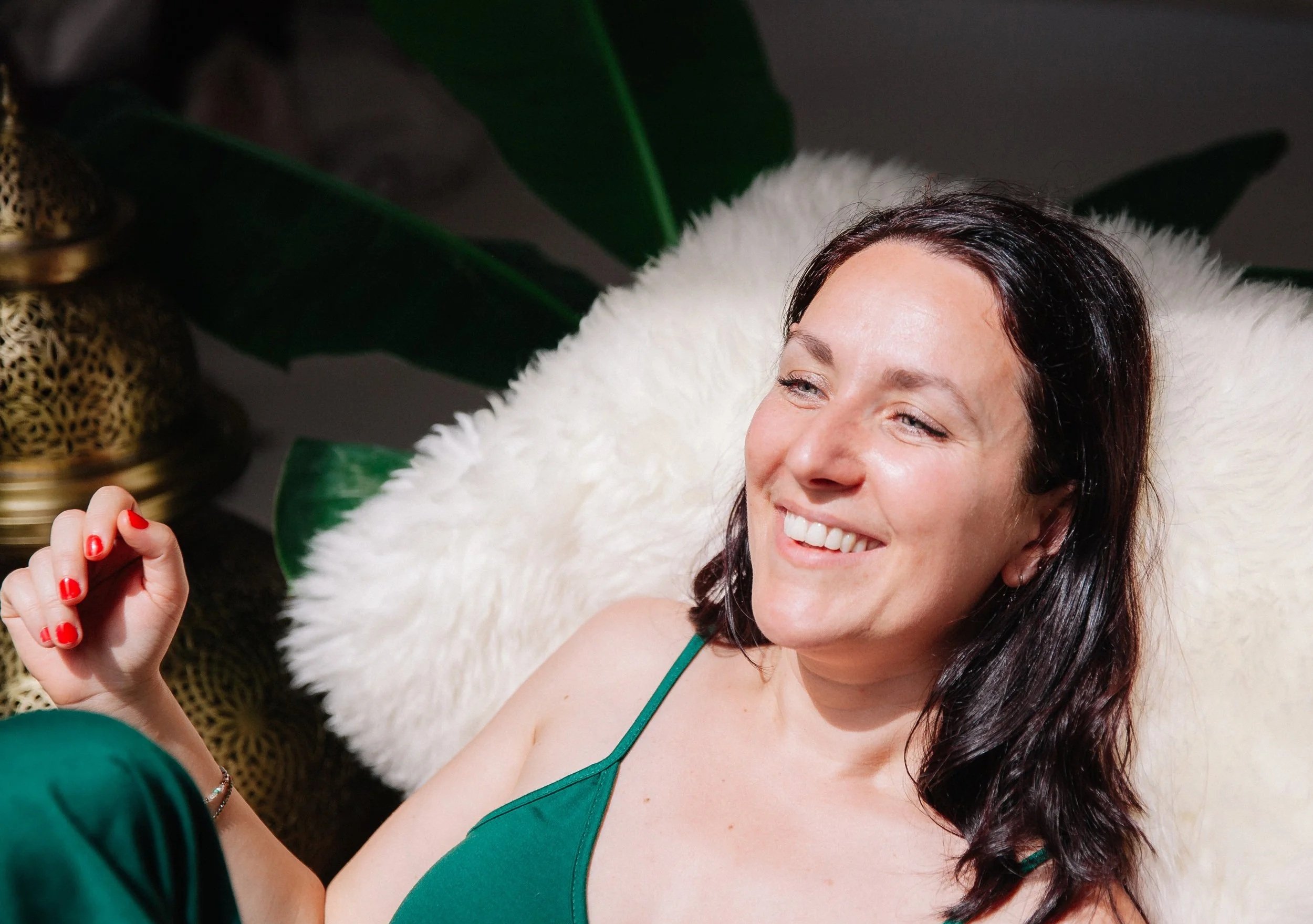
Hi, I’m Oana
I started doing this work because I believe every person has an unique gift to share with the world.
Some of us live our passion through our businesses, but when it's time to show the world what we offer and put ourselves out there, perfectionism, self-doubt and anxiety keep us hidden, endlessly preparing, taking yet another course. Years can pass until action is taken. Ask me how I know. ;)
Imposter Syndrome and I have met since I finished my studies and became a Mechanical Engineer. Then again when I became a Scrum Master, then as a Group Facilitator, then as a Life Coach. Self-doubt came also when I built my Watercolor Art Business(“I didn’t even study art, who am I to…”). Even as a Hypnotherapist it tried to bug me.
But here I am, doing what I love and I know it's possible for you to also build the grounded confidence to put yourself out there, be seen by your people and share your craft.
What are people saying
You might be wondering… (FAQ)
-
We're working directly with your nervous system—retraining the automatic reactions that kick in when you try to be visible. The freeze when you go to hit publish. The spiral when you think about stating your price. The endless editing loop. This isn't "how was your week" conversations—it's focused work on the specific patterns that stop you from showing up. We address what happens in your body and brain before any strategy can work.
-
Sessions are 60 minutes, online via Zoom. €80 per session, paid as you go—no upfront commitment, no locked-in program. Most people work with me for around 10 sessions, but you decide when the work feels complete. If you're done after 6, we stop at 6. If you need 12, that's fine too. You're in control of the pace and investment.
-
Yes, all sessions are taking place online, via Zoom.
-
Most people notice a shift within 3-4 sessions. Not that everything's fixed, but that visibility starts feeling less threatening. Real, lasting change usually happens in 8-12 sessions. Endless processing is not my thing, I do focused work on specific patterns.
-
Yes, because we're not working on "business strategy." We're working on the psychological patterns that stop you from using any strategy. When perfectionism makes you rewrite everything 10 times, or imposter syndrome stops you from stating your prices, that's not a business problem, but a nervous system “glitch“. And that's exactly what CBT-Hypnotherapy addresses.
-
Hypnotherapy isn't about being "put under" or losing control. It's a tool for accessing patterns that live below your conscious awareness, the automatic reactions that kick in when you try to be visible. You don't need to "believe in it" any more than you need to believe in physiotherapy for it to help your muscles. If you can focus and relax, it works.
-
Item description
-
Item description
-
It might be! Maybe you struggle with public speaking or you get anxious when you are in big groups. Maybe you struggle with stress. Or could be that you want to be more seen at work, but you are shy. Some people need support to find their purpose or to be more creative.
You can book a free 30 min call and we’ll explore possibilities together.
-
I have a soft spot for guiding people to set better boundaries. I also like to work with stress-related issues.
If you want to work on something similar or something else, book a 30 min free call and we’ll explore together what can be possible.